
Memory Palace in Your Pocket: Using Spatial Memory Techniques in Digital Tools
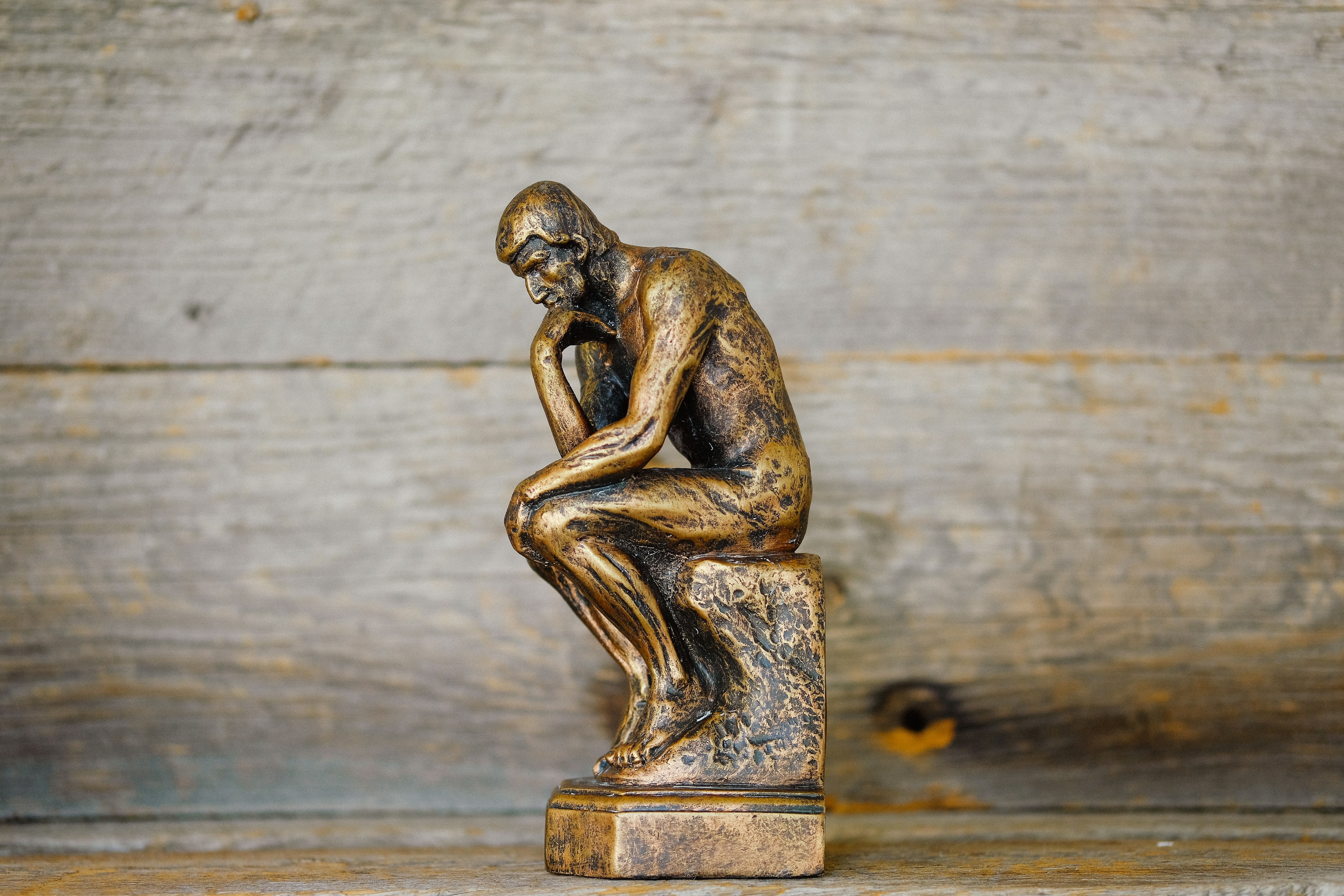
Memory athletes – the people who can recite a shuffled deck of cards in under twenty seconds – almost all use the same trick. It's about 2,500 years old, attributed to a Greek poet named Simonides of Ceos, and it relies on the strangest quirk of human cognition: we are terrible at remembering lists, and exceptional at remembering rooms.
The technique is called the method of loci, or, more commonly, the memory palace. You picture a building you know well – your childhood home, your route to work, your grandmother's kitchen and you place the things you want to remember at specific points along that route. When you want to recall them, you walk through the building in your head. The objects are exactly where you left them.
This works because the human brain evolved to navigate physical space. Lists are abstract. Rooms are not. Your hippocampus, which handles both spatial memory and episodic memory, lights up like a small city when you imagine walking somewhere you've been. Memory athletes are exploiting infrastructure your brain built to keep you from getting lost on the way to the watering hole.
The question I want to ask is whether any of this is useful in a digital context, and whether your notes app can borrow it. I think the answer is yes, but not in the way most "second brain" tools have tried.
What Most Digital Tools Get Wrong About Memory
The dominant metaphor in productivity software for the last fifteen years has been the library. Folders, tags, categories, hierarchies – your information lives on shelves, organized by some taxonomy you devised. Apple Notes is a library. Google Drive is a library. Notion, for most people, is a library with a fancier check-out system.
Libraries are great if you know exactly what you're looking for and you have a perfect index. They are terrible for the kind of memory humans actually have. Compare walking into a library you've never visited (you'd need a catalog and several hours) with walking into your own kitchen at 2 a.m. without turning on the light (you can find the kettle). One of those is the recall that most digital tools optimize for, while the other is the kind of recall your brain is actually good at.
The memory palace, in its original form, doesn't translate directly to software. You can't have a literal digital room. But the underlying principle – connect new information to existing structure – is doable, and a few tools have started doing it.
The Cognitive Science of "Wait, Where Did I Put That?"
Here's a phenomenon I think almost everyone has experienced. You can remember exactly where on a page you read something – top right, halfway down the left column – but not the page number. You can remember the corner of the meeting room where someone made a particular comment, but not the date of the meeting.
This is spatial encoding doing what spatial encoding does. Your brain attaches new information to the location where it was encountered so the location becomes a hook. When you try to retrieve the information later, the location is the easiest handle to grab.
To be clear: I am not arguing for paper – even though it will naturally encode more location properties by virtue of it being a physical artifact. I love paper, but I also have over a decade of digital notes and I don't want to leave them behind. The argument is that good digital tools should imitate spatial encoding instead of fighting it, and most of them don't.
How to Build a Memory Palace That Lives in a Database
Here's what memory athletes already know that most software designers haven't quite absorbed: the memory palace works because the structure is consistent and personal. The same kitchen, the same hallway, the same route, every time. Your brain learns where things go because the geography doesn't shift under you.
A digital version doesn't need rooms, it needs stable nodes – recurring objects in your knowledge graph that information gets pinned to. The most useful nodes tend to be:
People. Your brain is exceptional at remembering people. Notes connected to a specific person are easier to find later than notes filed by topic, because "that thing Dad said about the boiler" is a more findable handle than "home maintenance/HVAC/2024."
Places. Less obvious in a digital context, but powerful. A note attached to a specific location – the cabin, the office, your accountant's – is a memory palace in miniature. You walk into the place, you remember the note.
Events. A wedding, a trip, a meeting, a year. Time is a kind of geography for memory. Anything attached to "the week we moved" or "Sarah's surgery" lives in a denser, more retrievable part of your brain than the same information filed in a generic folder. I think most people are already organizing their digital lives in this way to some extent – I see Instagram posts about vacations or holidays, “Paris, March 2025” or “Manila Trip – Mom’s Birthday”
Projects. A bit more abstract, but it works the same way. Anything connected to "the kitchen renovation" lives in a coherent space in your head. The same notes filed under "renovations" don't.
If you can attach a note to one or more of these stable nodes, you've borrowed something from the memory palace technique. You've given the note a location in the cognitive sense, which is what makes it findable later.
Where Thinkspan Comes In
The graph database underneath Thinkspan has this built in When you add a note that mentions your brother's name, the note connects to your brother. When you save a photo from a trip, the photo connects to the trip. When you store a document about your house, it connects to your house.
You don't have to build the memory palace deliberately. You just have to populate it. The structure emerges from the connections.
In practice, this means that when you want to find something later, you don't have to remember which folder you put it in. You can navigate the way your brain wants to. Show me everything related to Dad. Show me what I was working on during the kitchen renovation. Show me the documents from the year we moved.
There's a deeper effect that takes a few months to show up. Once your knowledge graph is large enough, the connections start surfacing things you forgot you knew. The conversation with Dad about boilers connects to the kitchen renovation connects to the contractor who recommended a different brand connects to the warranty document you almost lost. Your past selves keep handing useful information to your future self, and you don't have to remember to ask for it.
How to Try This This Week
If any of this resonates and you want to play with the idea, here's a low-stakes way in.
Pick a single project you're working on right now. A renovation, a job search, a wedding, a thesis. Anything with multiple moving parts.
For the next two weeks, attach every note, document, photo, and reference connected to that project to a consistent stable node in whatever tool you use. A single tag, a single page, a single linked entity. Don't worry about perfect organization. Just make sure everything related to the project lives in one queryable place.
At the end of two weeks, do a recall exercise. Try to find a specific piece of information from the project without searching for the keyword. Navigate to it through the project node. Most people report finding things faster, and finding things they'd forgotten they had.
That's the memory palace working. Not magic. Just your brain doing what it was built to do, with a tool that finally got out of the way.
Ancient memory techniques still work because the human brain hasn't changed much in 2,500 years. Most modern tools ignore them because they were designed by people treating storage and retrieval as engineering problems, not cognitive ones.
You don't need a memory palace in your head if you have one in your tools. But you do need a tool that thinks more like a hippocampus and less like a filing cabinet.




Private AI for Life
Live your best life with Thinkspan: the all-in-one smart solution for organizing, securing, and accessing personal information. With Thinkspan, your life's most important information stays protected and accessible.

Stay Informed
Be the first to know about feature releases and get tips for living your best life by signing up for our newsletter.